
Rakebit Deposit 2026: match the asset, network and minimum
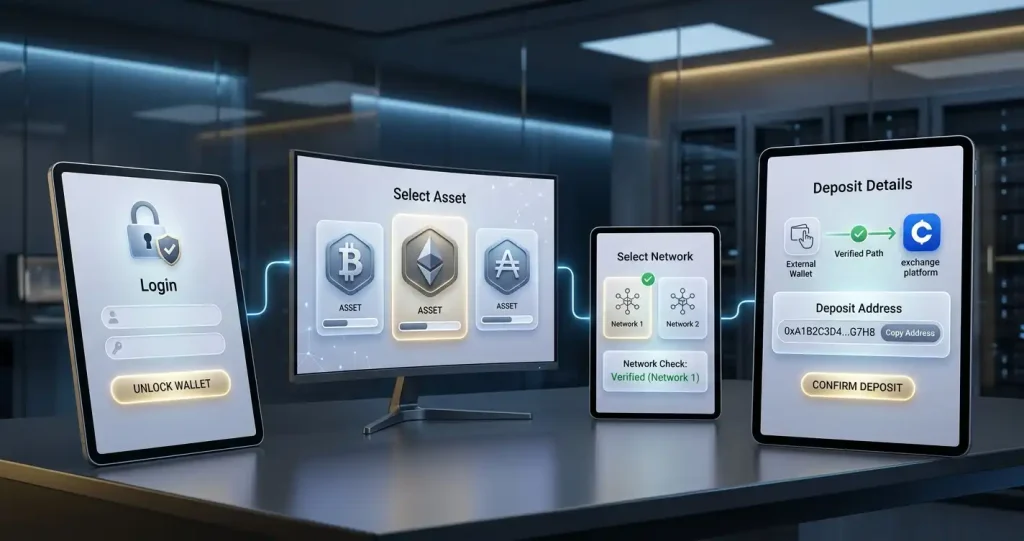
Table of Contents
- The deposit floor is small, but it is not one fixed amount for every coin
- Rakebit supports several chains, not just several coin symbols
- A five-step network check reduces avoidable deposit errors
- No platform deposit fee does not mean the transfer is cost-free
- Bonus qualification uses a higher deposit threshold
- A small stablecoin deposit shows why sequence matters
- Rakebit deposit FAQ
- Network matching is the critical control before a Rakebit deposit
Section element
Crypto deposit mechanics
Rakebit accepts 30+ cryptocurrencies, with a general deposit floor around $2 equivalent and stablecoin examples from around 5 USDT. The low threshold is only one part of the transaction: a correct network match matters just as much because the same token can travel over different blockchain rails.
The deposit floor is small, but it is not one fixed amount for every coin
Rakebit’s general crypto deposit floor is around $2 equivalent. One BTC example starts from 0.000059 BTC, while stablecoin examples start around 5 USDT. These figures describe a low entry point rather than a universal amount for every supported asset, so the live payment dialog should be checked before a transfer is signed.
- General crypto floorAround $2 equivalent
- BTC exampleFrom 0.000059 BTC
- Stablecoin exampleFrom around 5 USDT
- Deposit platform feeNone
The broader Rakebit payments guide compares deposit and withdrawal mechanics. If you are planning the full cash-in/cash-out cycle, also read the withdrawal guide before funding an account; the withdrawal minimum and review path are separate from the deposit rules.
Rakebit supports several chains, not just several coin symbols
The named asset set includes BTC, ETH, LTC, BCH, USDT, USDC, BNB, TRX, SOL, XRP, TON, DOGE and POL(MATIC), with overall support described as 30+ cryptocurrencies. Multi-chain support is most visible with stablecoins: USDT is listed across ERC20, TRC20 and BEP20.
| Asset | Listed network | Deposit threshold detail | What to verify before sending |
|---|---|---|---|
| BTC | Bitcoin | From 0.000059 BTC in one cited example | Bitcoin address and current minimum |
| ETH | ERC20 | General crypto floor is around $2 equivalent | ERC20 selection and address |
| USDT | ERC20 / TRC20 / BEP20 | From around 5 USDT | Token and network must both match |
| USDC | Multiple stablecoin networks; confirm in payment dialog | Confirm current asset-specific minimum | Exact network shown for the deposit address |
| BNB | BEP20 | General crypto floor is around $2 equivalent | BEP20 selection |
| TRX | TRC20 | General crypto floor is around $2 equivalent | TRC20 selection |
| SOL | Solana | General crypto floor is around $2 equivalent | Solana address format and current minimum |
| TON | TON | General crypto floor is around $2 equivalent | TON network selection |
| POL(MATIC) | Polygon | General crypto floor is around $2 equivalent | Polygon network selection |
| LTC / BCH / XRP / DOGE | Confirm in payment dialog where not shown here | General crypto floor is around $2 equivalent | Current address, network and minimum |
A listed network is not the same thing as a generic asset listing. Assuming that every route for the same token ticker is interchangeable is a common way to send funds over the wrong rail.
A five-step network check reduces avoidable deposit errors
Blockchain transfers are generally irreversible. The useful control is therefore placed before the send button, not after a transfer fails to appear. This is especially important for stablecoins because the same balance can often be withdrawn from an exchange over several different chains.
- Open the Rakebit deposit dialog and select the asset you intend to send.
- Read the exact network attached to the displayed deposit address.
- In the sending wallet or exchange, select that same network rather than relying on the token symbol alone.
- Check the current minimum and the network fee before signing the transfer.
- Save the transaction hash until the deposit has been credited and any payment question is resolved.
USDT is the clearest example
Rakebit lists USDT across ERC20, TRC20 and BEP20. A USDT balance is therefore not enough information by itself; the rail selected in the wallet has to match the rail selected for the casino address.
Native assets are simpler, not risk-free
BTC and other native-chain assets remove some network ambiguity, but the address, minimum and transaction fee still need to be checked before broadcast.
Exchange withdrawals add another screen
When funds come from an exchange, its withdrawal menu may offer several network choices. The casino’s selected network should determine which one you use.
Keep the hash as the receipt
A transaction hash lets you separate blockchain settlement from an account-crediting issue if the balance does not update as expected.
No platform deposit fee does not mean the transfer is cost-free
Rakebit does not add a platform fee to deposits. The blockchain transaction itself can still carry a network fee, which is paid outside the casino. That fee can vary with the network, wallet, exchange and current chain conditions; it is not a fixed Rakebit charge.
- Casino platform fee
- No deposit platform fee is listed.
- Network fee
- Paid as part of moving crypto on the selected blockchain; it is external to the casino.
- Price movement
- The fiat-equivalent value of crypto can move between funding and later withdrawal even when the coin amount stays the same.
- Irreversibility
- Once a blockchain transfer is confirmed, reversing a mistaken address or unsupported network transfer may be impossible.
This separation is why a percentage comparison is often more useful than looking only at a nominal network fee. If a transfer is very small, the same absolute fee consumes a larger share of the amount. The crypto value check on the home page can model fee and price-movement scenarios without treating them as casino charges or forecasts.
Bonus qualification uses a higher deposit threshold
The standard payment minimum and the bonus-qualifying minimum are different. Rakebit’s deposit-bonus route uses a 20 USDT minimum, while ordinary crypto deposits can start materially lower. That means a transfer can be large enough to credit as a deposit yet still fail to meet the separate threshold for the deposit-bonus path.
The distinction matters because the bonus route also carries its own mechanics, including 40× wagering, a €5 maximum bet during wagering and a 10× cashout cap. Those are bonus conditions rather than deposit mechanics. The Rakebit bonus guide keeps those rules together so that the funding decision is not made from the deposit minimum alone.
- Use the ordinary deposit minimum only to judge whether a payment can be accepted.
- Use the 20 USDT threshold only when checking qualification for the deposit-bonus route.
- Read the wagering and cashout rules before attaching a bonus decision to a deposit.
- Do not treat a bonus credit as a way to offset blockchain volatility or network fees.
A small stablecoin deposit shows why sequence matters
Consider a reader who intends to send USDT. The first question is not the amount; it is which USDT network the deposit screen has selected. If the screen shows TRC20, the sending wallet also needs TRC20. Only after that match should the reader compare the amount with the current minimum and review the network charge.
If the purpose is simply to fund the account, the general payment minimum is the relevant threshold. If the purpose is to enter the deposit-bonus route, the 20 USDT qualifying minimum becomes relevant as well. One transfer therefore has two separate checks: whether the casino can accept the payment and whether the amount qualifies for a promotional mechanic.
After broadcast, the transaction hash becomes the useful reference. It shows whether the transfer exists on-chain and provides a concrete identifier if the account balance does not update. That is more actionable than repeatedly resending funds or changing networks in response to a delay.
Rakebit deposit FAQ
What is the minimum Rakebit deposit?
The general crypto deposit floor is around $2 equivalent. Stablecoin examples start around 5 USDT, while the deposit-bonus route uses a separate 20 USDT qualifying minimum.
Which cryptocurrencies can I deposit at Rakebit?
The named set includes BTC, ETH, LTC, BCH, USDT, USDC, BNB, TRX, SOL, XRP, TON, DOGE and POL(MATIC), with overall support described as 30+ cryptocurrencies.
Which networks does Rakebit use?
The listed network set includes Bitcoin, ERC20 for ETH, TRC20 for TRX, BEP20 for BNB, Solana for SOL, Polygon for POL and TON for TON. USDT is listed across ERC20, TRC20 and BEP20.
Does Rakebit charge a deposit fee?
No. Deposits have no Rakebit platform charge, although the sending wallet or blockchain can still impose its own network cost.
Why does the network choice matter for a crypto deposit?
The asset and network must match the deposit instructions. A token such as USDT can use more than one network, so sending it on a different rail from the selected deposit address can prevent automatic credit and may be difficult to recover.
Network matching is the critical control before a Rakebit deposit
Rakebit’s low crypto minimums make small deposits technically possible, but the transaction still depends on correct network selection and an external blockchain fee. Stablecoins deserve the closest check because USDT is available across several rails. Match the asset and network first, confirm the live minimum second, and treat the 20 USDT bonus threshold as a separate rule rather than part of the basic deposit floor.